A responsible employer also supports employees who are transitioning from work to retirement
The Otava Group wants to support both retiring employees and their supervisors by offering them a coaching programme: From Work to Retirement. This coaching is a concrete example of how Otava takes responsibility for its employees throughout their career, including as it draws to a close.
Retiring evokes a broad spectrum of thoughts and feelings. Some people eagerly look forward to retirement, while for others it seems like a distant prospect – even if the option to retire is only a few years away.
Retirement can also give employers a lot to think about: although we’re not impatient for our employees to leave, we do need to be able to discuss retirement with them well in advance without making them feel as if we’re trying to get rid of them. And how do we ensure that all our employees’ tacit knowledge is retained?
The Otava Group has addressed this issue by organising From Work to Retirement – a coaching programme for retiring employees and their supervisors.
Retirement is a shared concern
From Work to Retirement was held for the second time in spring 2026. All Otava Group employees born in or before 1963 were invited to participate in the coaching. Our goal is for people to take the coaching programme three years before they reach the minimum retirement age. This gives both the retiring employees and their supervisors time to prepare for the transition.
Sini Norring, an HR Specialist at Otava, explains how the Group wanted to develop age management while also clarifying retirement processes from the perspective of both the retiree and their supervisor.
“People may not realise just how much retirement entails. And we also want our employees to know what their options are when it comes to retirement. Employees and supervisors get a natural opportunity to discuss these topics during the coaching sessions.”
And thanks to the coaching, the employer doesn’t come away empty-handed either. Starting the conversation early gives supervisors the chance to consider how to retain core competencies and tacit knowledge.
“At Otava, we have long-standing employees and a really professional team. If someone were to announce that they’re retiring in a month’s time, we’d be in big trouble,” says Norring.
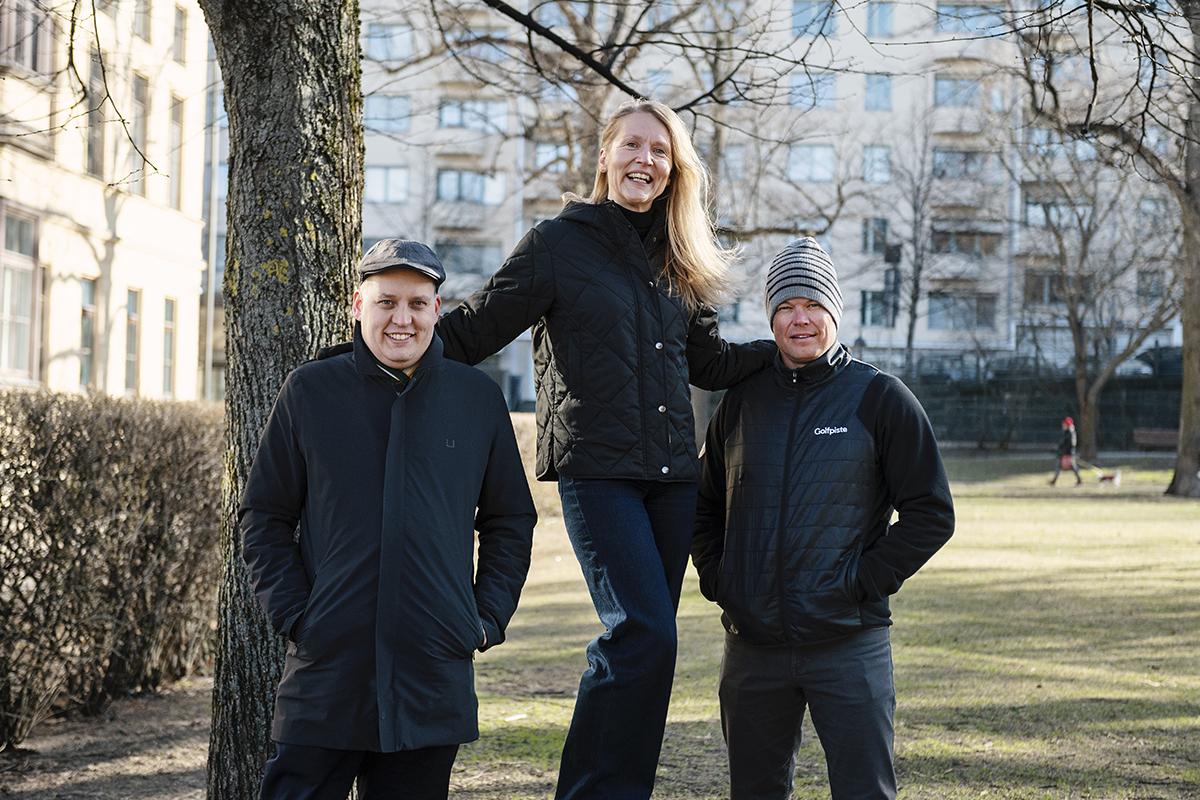
Marina Johanson (left) has worked at Suomalainen Kirjakauppa for eight years, and is retiring with a sense of gratitude and appreciation.
So what will I be when I’m retired?
Last autumn’s From Work to Retirement programme was a pilot that received good feedback, which was then used to develop the spring programme.
The programme consists of two Teams coaching sessions. Participants also have access to an online workspace with relevant materials, such as exercises to be completed with their supervisor.
Elina Juth, an employment pension specialist from Varma, explained the retirement process during the first coaching session: everything that needs to be taken into account, which forms need to be filled out, how pensions are calculated, and other practical things related to the process.
The second session focused on the psychological aspects of retirement. This was led by Tiina Merikanto, a feature writer and expert by experience, as she herself retired a few years ago: what is life like when work no longer sets the pace, and how is that reflected in your daily routines, how you spend your days and, consequently, your social relationships?
“Some people are waiting for retirement with one foot out the door, and have made plenty of plans for it. But not everyone has a plan. That’s why it’s so important to encourage people to think about how their life will change when they retire,” says Norring.
From Work to Retirement – a coaching programme
- Part of Otava’s career-long induction programme.
- This coaching programme was held for the second time in spring 2026, and is open to all Group employees who are approaching retirement age and their supervisors.
- It consists of two Teams coaching sessions. The first session deals with the financial aspects of retirement and how pensions are calculated, while the second session handles the psychological aspects of retirement.
“Your spouse and friends may still be working, which is why it’s so important to have your own retirement plan,” says Jari Koskelo.
An important topic, but it could have been more concise
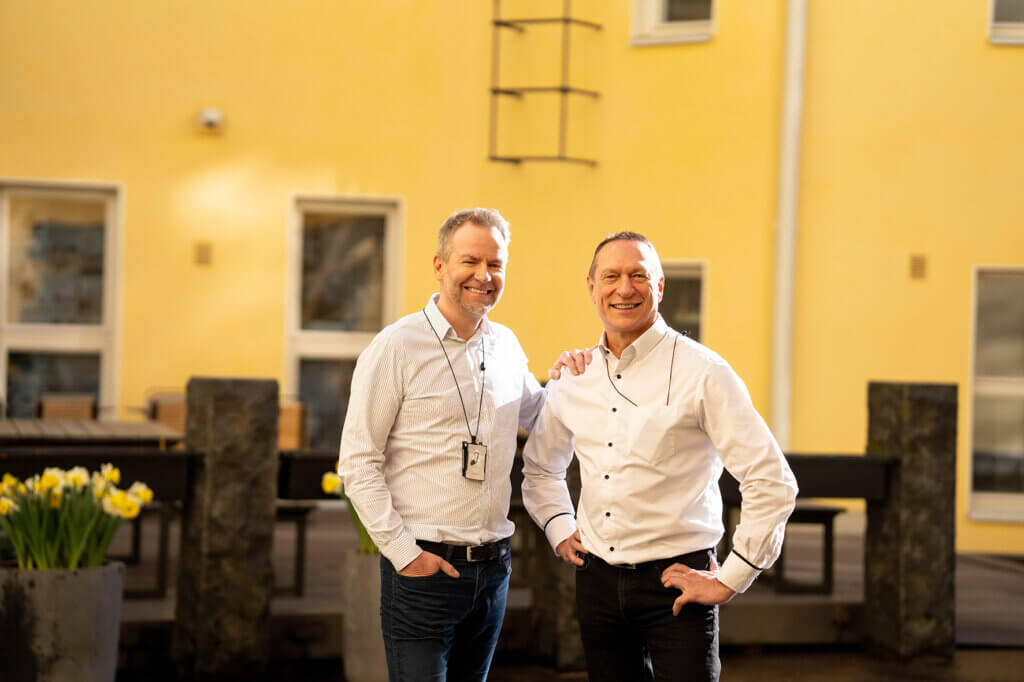
Account Manager Jari Koskelo from Otavamedia’s B2B unit received an invitation to the coaching early this year.
“Even though I wasn’t aware of the coaching, the invitation didn’t come as a surprise. I’m planning to retire in two years, when I turn 65,” says Koskelo. He has worked at Otavamedia for more than 20 years.
Although Koskelo is already receiving a partial early retirement pension, he still works full time. Koskelo feels that the first coaching session, which handled pension accrual and its bases, could have been shorter and more concise. However, he thinks it’s great that these matters are being explained, as not everyone is familiar with them.
Jari’s supervisor, Jani Koivunen, agrees that it could be more concise.
“As a rule, everyone is interested in their own pension accrual and how it will affect their finances during retirement.”
However, the information given during the first coaching session was all new to Marina Johanson , a salesperson at Suomalainen Kirjakauppa.
“For example, the information about early retirement options was good. Whether you go for that somewhat depends on your profession and physical condition,” says Johanson.
She works at the Lippulaiva store in Espoonlahti, but also pops into the Iso Omena store from time to time.
Johanson’s supervisor, Store Manager Hellevi Anttila, nods in agreement beside her.
“I formed a concrete understanding of how my pension accrues, and at what age I would be able to retire. It was also interesting to learn that you can continue working even after you retire, which will increase your pension right up until the maximum retirement age,” says Anttila, adding that she has already encouraged Johanson to do some seasonal work after she retires.
It’s a good idea to have some kind of plan
The second coaching session, which focuses on the psychological aspects of retirement, gets Koskelo and Koivunen talking.
“I realise that I’ll no longer be a member of the workplace community after I retire. It’s also good to keep in mind that you’ll still have an active period of about ten years after retiring, so it’s worthwhile having some kind of plan for that,” says Koskelo.
The research findings on how various people experience retirement were new to Koivunen.
“During the coaching, it became apparent that some people plan to clean out their closets after they retire – yet two weeks later, they find themselves at a loss for what to do, as they don’t have the kind of plan that Jari mentioned.”
A lot of time was also spent on discussing identity. As many people in Western countries build their sense of identity around their professional identity, retirement can put them in a tough place.
Johanson says that she has a strong sense of identity that is rooted in areas other than her professional life.
“Retirement certainly feels like a huge step. I have wonderful coworkers and a great supervisor, but I think I’ll manage. I have plenty of hobbies and friends – and I love spending time at my summer cottage. I’m not worried about being left with nothing when I retire,” she says with a smile.
Have Koivunen and Anttila already begun preparing for the fact that long-time employees Koskelo and Johanson will soon be leaving the team?
“We’ve known for some time that Marina will be leaving, and although we haven’t found a replacement for her yet, there’s plenty of time,” says Anttila.
“We plan to divide Jari’s named accounts between his colleagues, or possibly assign them to a new employee. However, we still have a couple of years before he leaves, so we’ll carry on as usual until then,” says Koivunen.
Age management in the Otava Group
In the Otava Group, age management is an integral part of responsible HR management. It aims to support smooth workflows, working capacity and competence development throughout the various life situations of our employees’ careers. Our management style is based on equality, active listening and valuing diversity.
5 x age management
1. Equal treatment
All employees are treated equally, regardless of their age. Otava does not tolerate discrimination, and we view diverse backgrounds and life situations as a strength in our workplace community.
2. Taking life situations into account
We take the individual circumstances of our employees into account at different stages of their careers. Our management style is based on listening, dialogue and fair decision-making. Flexible work arrangements help employees to maintain a good work-life balance in a variety of life situations, such as while studying, during family leave, or when caring for loved ones.
3. Preemptive support for working capacity
Working capacity is systematically managed at all phases of life. Our aim is to identify any need for change in good time, and to support success at work. Working capacity is supported as part of supervisory work and HR processes, such as early intervention models and working capacity management practices. Personnel have access to a tool called Channels For Listening.
4. Career-long professional development
All employees have the opportunity to learn and grow, regardless of their age. Maintaining and updating everyone’s skills is part of our daily work. Careers are viewed as a whole, taking into account the differing needs and objectives at the beginning, middle and end of our employees’ careers.
5. Managed retirement and knowledge transfer
Employees and their supervisors make preparations for retirement well in advance. Otava offers From Work to Retirement, a coaching programme that helps employees and supervisors to prepare for retirement in a timely and well-managed manner.