Tähtipöllö – Working for better literacy
Good reading skills are no longer a given in Finland. Otava also recognised the need to address gaps in reading skills, and our desire to improve literacy led to the creation of the Star Owl reading competition for primary schools. This competition has succeeded in motivating students to read, regardless of their skill or starting level.
Finns have traditionally been a literate people. However, school learning outcomes indicate that young people’s reading skills are declining and gaps are forming. The gap between good and poor readers is widening, and family backgrounds are having a greater impact on learning outcomes than ever before. Good reading skills are no longer a given, even in Finland.
Otava also noticed this trend – and took action. As a book publisher and expert in Finnish education, Otava wants to play its part in promoting literacy, as strong reading skills are also the foundation of a diverse democratic society. Which is why we created the Tähtipöllö (Star Owl) competition.
“The Tähtipöllö competition is sustainability action. Encouraging children to read is one way of tackling growing inequality.”
The Tähtipöllö reading competition is aimed at primary schoolchildren. During the four-month competition, primary school classes compete to see which grade can read the most pages. The winning classes will receive a cash prize and the runners-up will be rewarded with books.
“The Tähtipöllö competition is sustainability action. Encouraging children to read is one way of tackling growing inequality,” says Anna-Reetta Sipilä, Content Director at Otava Learning.
Sipilä says that it was natural to involve schools in Otava’s literacy work, as all Finnish children receive a comprehensive education. “Not every student will have the same opportunities to become enthusiastic readers at home, but they do in the classroom. As Otava can reach all classroom teachers, we have the opportunity to leverage this network.”
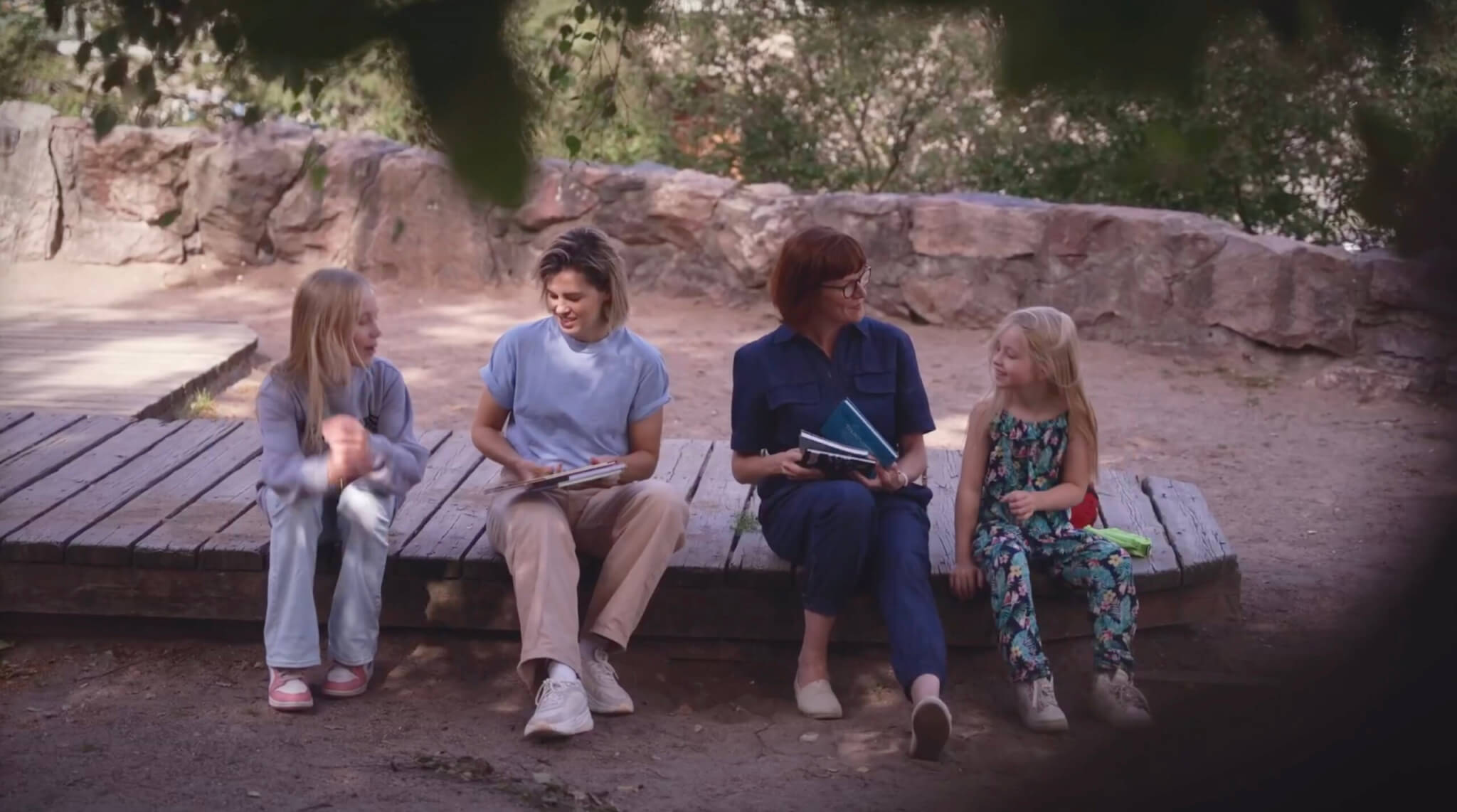
According to Kaisu-Maria Toiskallio and Katriina Laturi, there’s been a good vibe in the Tähtipöllö team from the outset.
55 million pages read
A total of 373 schools took part in the last Tähtipöllö competition. That’s only 17 more schools than in the previous year. However, 55 million pages were read during the competition – an increase of 20 million on the previous year, which means that the number of pages read in schools has increased considerably.
This significant rise in the number of pages read shows that the competition has achieved its goal. Primary schoolchildren have been inspired to read. The competition aims to enable everyone to succeed, regardless of their reading skills or background. Participants are free to read anything: comics, advertisements, textbooks.
“The competition offers readers the opportunity to discover themselves through reading things that interest them,” says Otava’s Kaisu-Maria Toiskallio, Publishing Director, Books for Children and Young Readers.
This enthusiasm is also maintained by ensuring that the children have something to read. Otava Publishing Company makes sure that there are book series available for readers of all levels. A good reading experience that suits your level will entice you to pick up the next book, and the next. This is how you create a positive reading cycle. The school’s task is to ensure that students have access to a broad range of books and different types of texts.
The goal-oriented nature of the competition helps to develop the perseverance that is required to practice any skill.
The goal-oriented nature of the competition also reinforces the positive cycle. Schoolchildren are motivated to read in order to add to their class’s joint pot. And when the students actively monitor their class’s progress, everyone wants to do their part. This also increases the students’ own sense of responsibility.
The goal-oriented nature of the competition helps to develop the perseverance that is required to practice any skill. Good reading skills, like other skills, can only be developed through regular, long-term practice. Primary school is a good time to lay the foundations for good reading skills. The journey from being able to correctly read words aloud to being able to understand, interpret, assess and use texts in a variety of contexts is a long one. Six years of primary school gives you plenty of time to practice.
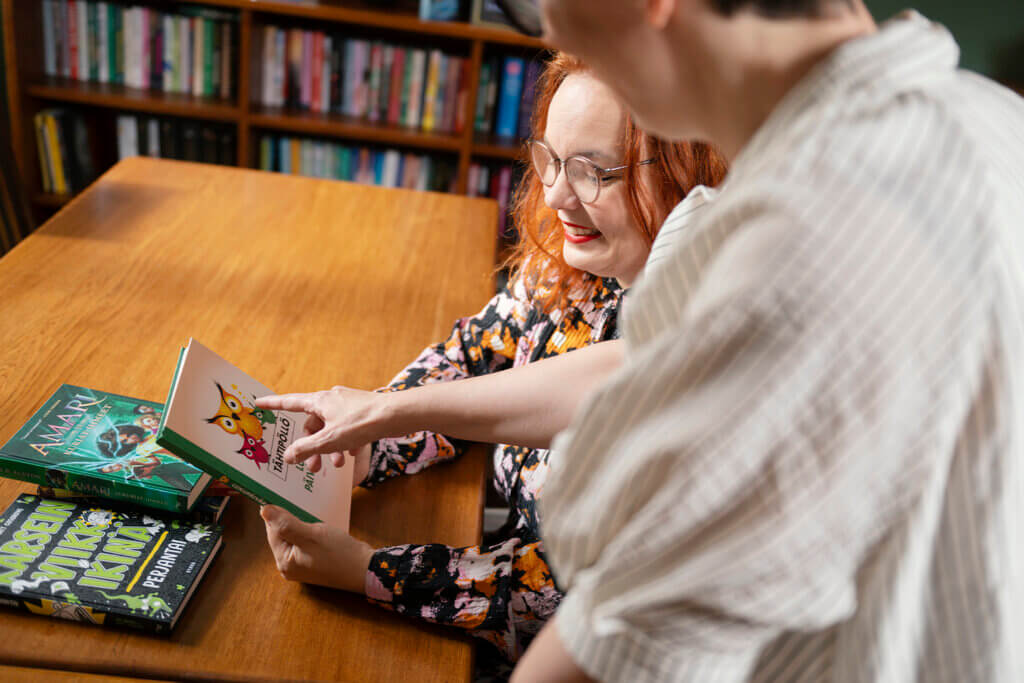
Reading skills must be developed systematically
Class teacher Kirsi Katila has spent two years working systematically on reading skills with her class. Katila’s colleagues encouraged her to enter the class into the Tähtipöllö competition. Class 2B at Metsola School in Lohja were keen on reading from the outset, and have developed some good routines. These include daily reading assignments.
One reason for their success in the competition is that these avid readers always have new and varied reading material available to them. Differences in reading skills are still significant in the second grade, and a couple of students are studying Finnish as a second language. There should be something for everyone to read. Luckily, a mobile library stops in the schoolyard every week to supplement the school’s offering. All students have a library card, and the class have practiced using their cards together.
“Everyone’s reading speed has increased and their thirst for knowledge has grown.”
The class had no need to seek motivation for either reading or the competition. There are many athletes in Katila’s class, so the students are used to competing and working towards goals. Taking part in the Tähtipöllö competition is especially motivating, as everyone is working together to achieve a common goal. Which means that everyone’s input is important. In Katila’s class, the students also read in pairs (that is, read a chosen book with a partner), which further increases the community spirit.
Katila says that victory is not the only thing that the class has achieved in the Tähtipöllö competition.
“Everyone’s reading speed has increased and their thirst for knowledge has grown.”
“We want to give all students the sense of achievement that comes from reading an entire book, or ten pages, or five pages, or whatever their personal goal may be.”
Shared success
Improving a student’s reading speed is the task of primary education, as reading and writing skills are already learning tools in the third grade. Although Katila’s class is well on its way to building a firm foundation in this area, cooperation between home and school is also required to improve reading skills. Katila feels that the competition has intensified that as well. Parents have been fully involved in Katila’s literacy work, and understand the importance of reading.
“Parents check reading assignments at home, and homework is also being done together.”
Anna-Reetta Sipilä says that the Tähtipöllö competition is an example of all-round successful cooperation. It has not only brought the Otava Group’s various departments together, but has also reached a huge number of teachers, thanks to whom reading skills have improved and cooperation between school and home has intensified. This has also raised awareness of reading skills at home.
“The competition has brought about change.”

What is the Tähtipöllö competition?
- The Tähtipöllö reading competition was held for the third time from September 2025 to early January 2026.
- The reading competition is aimed at the lower grades in primary schools. Classes compete against each other at grade level. The class teacher registers the class for the competition and reports the number of pages read.
- Classes can follow the rankings in real time on the competition website. The website also includes inspiring book recommendations and a variety of tests.
- The class that reads the most pages wins the Tähtipöllö competition.
- 356 classes participated in the last competition. Together, the classes read a total of 55 million pages during the competition. This was 20 million more pages than in the previous year.
- The competition encourages diverse reading and enables readers of all levels to participate. All reading counts towards the page count, including comics, magazines, novels, non-fiction books, picture books and textbooks.
- The reading competition has also been a joint effort at Otava, as it requires cross-departmental collaboration. In addition to Otava Learning, some arrangements for the competition are also made by the Children’s and Young Adult Literature department. The marketing team is also involved.