Otava Book Printing’s renewal reduces book waste and strengthens domestic production
The printing house’s new equipment enables a new way of working. Books can be produced in smaller batches, precisely when they are needed.
Autumn 2026 is an exciting time at Otava Book Printing in Keuruu, as a new digital production line will be commissioned by the end of the year.
“This is not just about new machinery, but about a new way of managing a book’s entire life cycle,” says Marko Silventoinen, Managing Director of Otava Book Printing.
“Domestic book production will become even more flexible and efficient, as we will be able to produce books in smaller batches, shorten delivery times and improve availability.”
The new equipment comprises a Canon ColorStream digital printing press, a Hunkeler Starbook finishing line, a Müller Martini Antaro perfect binding line and Müller Martini Diamant hardcover binding equipment.
Books printed on demand
The biggest change is the shift from print-run planning to production guided by actual demand.
“Until now, the size of a book’s first print run has been an estimate based on pre-sales and sales forecasts,” Silventoinen explains. “If the print run is too large, the books remain in storage for three years before being pulped, in other words destroyed.”
In future, a book can initially be printed in a very modest quantity, with demand monitored through the system and reprints produced automatically as needed. This will considerably reduce the number of books that end up in storage or go to waste. Reprints will also be available more quickly.
“Delivery times are currently two to three weeks. With the new equipment and process, we will be able to reduce delivery times rapidly to around one week, and in the longer term we are aiming for delivery within a few days.”
The impact extends across the entire book value chain
“Our new operating model will have an impact across the entire book value chain, from author to reader,” Silventoinen points out.
Authors naturally value having their books readily available when readers want them, while publishers will find it easier to decide on print-run sizes, reducing the risks involved in publishing.
Bookshops will be better able to stock the books that are in greatest demand, without having to act as book warehouses themselves. At the end of the chain, consumers – the readers – will receive the title they want immediately, and any additional demand can be met quickly.
An investment in Finnish book production
Silventoinen emphasises that the renewal of Otava Book Printing represents a significant investment by Otava Group in Finnish book production and the printing industry.
“It is valuable that we can produce books locally in a cost-effective and sensible way, and it is something we should be proud of. I am particularly pleased that we continue to produce learning materials in Finland,” Silventoinen says.
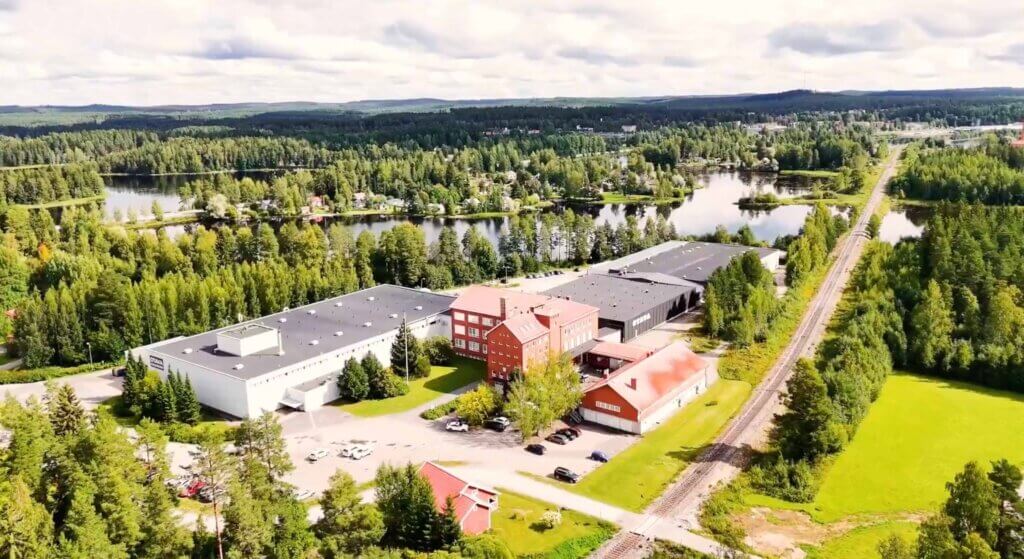
News of the equipment investment was also excellent news for the employees of Otava Book Printing.
“The investment shows that there is confidence in the future of our printing operations and a commitment to developing them,” Silventoinen says.
Demand monitoring is automated
At the beginning of October, the new digital printing and finishing lines were already in place at Otava Book Printing’s production facilities, with operator training due to begin shortly. The binding equipment is expected to arrive in mid-November.
The renewal process will not end once all the equipment in the new production line has been installed and commissioned by the end of the year. Employee training will continue next year, as will the development of the new operating model as a whole.
The most important development priority is to create a system that monitors product demand and automatically orders reprints.
“In addition, we are revising material standardisation, product registers, workflows and order-to-delivery processes to ensure that we gain the full benefit of the investment,” Silventoinen says.
The employees of Otava Book Printing are multi-skilled professionals
For Otava Book Printing’s employees, the introduction of new production and finishing equipment means learning new skills.
“This is about developing expertise, not replacing traditional printing-industry skills,” Managing Director Marko Silventoinen stresses.
“The new equipment is fairly easy to learn to operate. Although it is modern, the technology is already familiar to us, so we have the necessary core expertise.”
The biggest change is that production work will increasingly involve managing the process as a whole rather than carrying out individual work stages.
“Automation will increase, production batches will become smaller and the pace of production will accelerate. At the same time, the work will become more significant, as employees take greater responsibility for process control, quality assurance and production optimisation.”
Preparations for the renewal have been thorough and began well in advance.
“The team has familiarised itself with the new equipment and its operation in real production environments, operating models have been planned together with the equipment suppliers, and production workflows are currently being developed,” Silventoinen says.
According to Silventoinen, there is clearly plenty of enthusiasm for learning new skills: as soon as employees were asked who would be interested in training on the new equipment, a large number volunteered.
“Our goal is to have as many multi-skilled employees as possible. The more equipment each employee can operate, the more flexible production will be – and the more meaningful the work will be for the people doing it.”
Artificial intelligence has been utilized in the English translation of this article.